The Diploma on the Wall Isn't Doing the Work Anymore
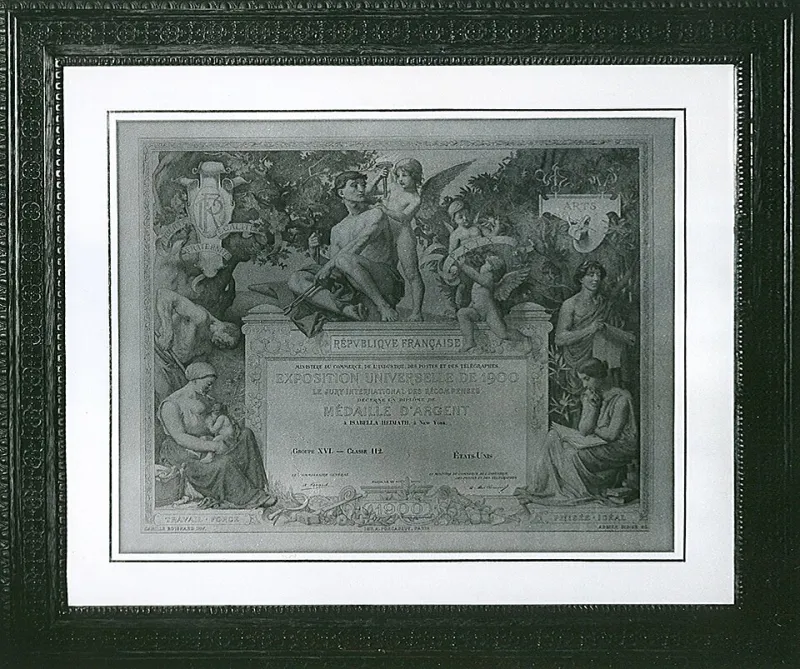
Photo: République Française, Ministère du Commerce, de l'Industrie, des Postes et des Télégraphes, Public domain, via Wikimedia Commons
Let me tell you about a conversation I keep having. Someone talented — genuinely talented — is agonizing over whether to get a master's degree. They want to write, or design, or direct, or build brands. They have work. Good work. But they feel like something is missing, like there's a velvet rope they haven't figured out how to get past. And they've decided the rope is held by a university admissions office.
It isn't.
That rope dissolved a while ago, and a lot of people are still standing in line for it.
What Credentials Were Actually For
To be fair, the obsession with formal qualifications wasn't irrational. For most of the twentieth century, a degree from the right program was a legitimate signal. It told an employer that someone had been vetted, trained inside a specific tradition, and approved by people with institutional authority. In industries where output was hard to evaluate before you hired someone, credentials were a reasonable shortcut.
Creative fields were always a weird fit for that model, but they played along because the gatekeepers — studios, publishers, agencies, networks — had enough market power to make their preferences stick. If Random House or Ogilvy or NBC wanted to see an MFA or a J-school pedigree, you got one. The credential wasn't proof of skill. It was proof of access to the right rooms.
That's the part that's changed.
The Rooms Are Different Now
The rooms where opportunities actually live in 2024 don't care about your institutional affiliations. They care about what you've made and whether it worked.
A brand looking to hire a content strategist isn't filtering résumés by degree. They're Googling your name and clicking around for ten minutes. An independent production company isn't asking where you went to school — they're watching your reel. A startup founder evaluating a designer's pitch doesn't care about your thesis committee. They care whether your last three projects solved actual problems for actual people.
This is what people mean when they talk about the portfolio economy, and it's not hype. The demonstrated-work model has genuinely displaced the credentialed-background model across huge swaths of the creative industry. Not everywhere, not completely — I'll get to that — but enough that defaulting to "I need more credentials" as a career strategy is increasingly a way to spend money and time on the wrong thing.
The Credential Trap in Practice
Here's how the trap works. You're early in your career and things feel uncertain. You look around and try to identify what separates the people who are working from the people who aren't. And because credentials are visible and legible — you can point at them, put them on a résumé, feel like you've accomplished something concrete — they become the thing you reach for.
The problem is that the people who are working, who are actually building sustainable creative careers, mostly got there by doing the work. They took projects that scared them. They published things before they felt ready. They shipped, iterated, built a body of evidence that said this person can execute. The credential was often incidental, sometimes irrelevant, occasionally an afterthought they picked up after they'd already proven themselves.
Meanwhile, the people in the trap are accumulating qualifications while deferring the part that actually matters: making things and putting them in front of people.
Where Credentials Still Count
I want to be straight with you, because I'm not interested in telling you what sounds good if it's not actually true. There are contexts where formal credentials still carry real weight.
If you want to teach at the university level, you generally need the degree the institution requires. If you're pursuing certain journalism fellowships or grant programs, the selection committees may genuinely weigh academic background. In some corporate environments — particularly larger, slower-moving ones — HR systems are still built around degree requirements as a filtering mechanism.
And yes, there are moments when a credential signals something real: deep theoretical grounding, sustained commitment to a craft, exposure to a particular tradition of thinking. An MFA in fiction from Iowa isn't nothing. It's a specific kind of training with specific value.
The issue isn't credentials themselves. The issue is treating them as the primary lever when they're increasingly a secondary one.
What Actually Moves the Needle
So if not the degree, then what? A few things that consistently matter more:
Work that exists publicly. A portfolio, a body of writing, a GitHub repo, a YouTube channel, a design archive — anything that lets someone evaluate your output without having to take your word for it. The bar isn't perfection. The bar is existence.
Results you can articulate. Not just "I designed a campaign" but "I designed a campaign that increased email signups by 40%." Not just "I wrote for a publication" but "I wrote a piece that drove more traffic than anything they'd published that quarter." Specificity is credibility.
A network built on actual relationships. Not LinkedIn connections, not follower counts — people who have worked with you and will say so. The informal reference economy is more powerful than any credential in most creative hiring decisions.
Consistent output over time. Longevity signals seriousness in a way that a degree can't. Someone who has been publishing, building, and iterating for three years has demonstrated something a diploma simply doesn't: that they actually keep doing the work.
The Permission You're Waiting For Isn't Coming
The deeper issue with credential-chasing is psychological. A degree feels like permission — like once you have it, you're officially allowed to call yourself a writer, a designer, a creative professional. You've been approved.
But that approval doesn't come from an institution. It never really did, even when institutions had more power. It comes from doing the work long enough and publicly enough that the question stops feeling relevant.
You don't need a program to tell you that you're a writer. You need to write things and let people read them. You don't need a certification to call yourself a strategist. You need to have actually solved strategic problems for clients who will confirm it.
The diploma on the wall is fine. I'm not telling you to take it down. I'm telling you it's decorative at this point. The work is what's actually doing the job.